Living with borderline personality disorder (BPD) can be challenging. Intense emotions, fear of abandonment, relationship difficulties, impulsive reactions, and sudden changes in mood can make everyday situations feel difficult to manage. Even when you recognize these patterns, responding differently in the moment isn’t always easy.
This is where finding the right type of therapy can become an important part of treatment. Dialectical behavior therapy (DBT) was developed to help people build practical skills for managing intense emotions, coping with distress, navigating relationships, and reducing behaviors that may cause harm.
But how does DBT work for borderline personality disorder, and what can you realistically expect from this type of therapy? In this guide, we’ll look at how DBT can support people with BPD, the skills it teaches, and what research says about its effectiveness.
What Is Borderline Personality Disorder?
Borderline personality disorder (BPD) is a mental health condition that can affect how a person manages emotions, relationships, and their sense of self. People with BPD may experience emotions more intensely or have difficulty returning to a calmer emotional state after something upsetting happens.
According to the National Institute of Mental Health (NIMH), BPD affects an estimated 1.4% of U.S. adults. BPD is also seen frequently in clinical settings, with the DSM-5-TR reporting that it occurs in approximately 10% of psychiatric outpatients and 20% of psychiatric inpatients.
BPD can look different from person to person. Some people may experience a strong fear of abandonment or have relationships that feel intense and difficult to maintain. Others may struggle with impulsive behaviors, anger, feelings of emptiness, or sudden changes in mood.
For some people, BPD can also involve self-harm or suicidal thoughts and behaviors. These experiences can be distressing and may make everyday situations and relationships harder to navigate.
But BPD is treatable, and therapy can play an important role in learning healthier ways to manage these challenges. Dialectical behavior therapy (DBT) was developed with these difficulties in mind. It focuses on practical skills that can help people manage intense emotions, tolerate distress, and respond to difficult situations in healthier ways.
What Is Dialectical Behavior Therapy (DBT)?
Dialectical behavior therapy (DBT) is a structured form of psychotherapy. It was developed by psychologist Marsha Linehan and was initially designed to help people with borderline personality disorder (BPD) and chronic suicidal behaviors.
DBT is built around two ideas that may seem opposite: acceptance and change. It helps people understand and accept their emotions while also learning new ways to respond to them.
Rather than only talking about difficult experiences, DBT focuses on practical skills that can be used in everyday situations. These skills can help people manage intense emotions, cope with distress, and handle relationships more effectively.
DBT generally focuses on four core skill areas:
- Mindfulness: Learning to stay present and notice thoughts, feelings, and experiences without immediately reacting to them. One example is Wise Mind, a skill that helps you balance emotional responses with logical thinking. You can also learn more about mindfulness-based approaches in our guide to mindfulness-based cognitive therapy.
- Distress tolerance: Developing healthier ways to cope with difficult emotions and stressful situations without making the situation worse. TIPP, which includes temperature change, intense exercise, paced breathing, and paired muscle relaxation, is one example of a distress-tolerance skill.
- Emotion regulation: Learning to understand emotions, identify what influences them, and manage them more effectively. Opposite Action is one DBT skill that can help you respond differently when an emotional urge may not be helpful in a particular situation.
- Interpersonal effectiveness: Building skills for communicating, setting boundaries, asking for what you need, and navigating relationships. DEAR MAN is one DBT skill that helps people communicate more effectively while maintaining self-respect and relationships.
Together, these skills can help people with BPD respond to difficult emotions and situations in healthier and more intentional ways.
How Can DBT Help People With BPD?
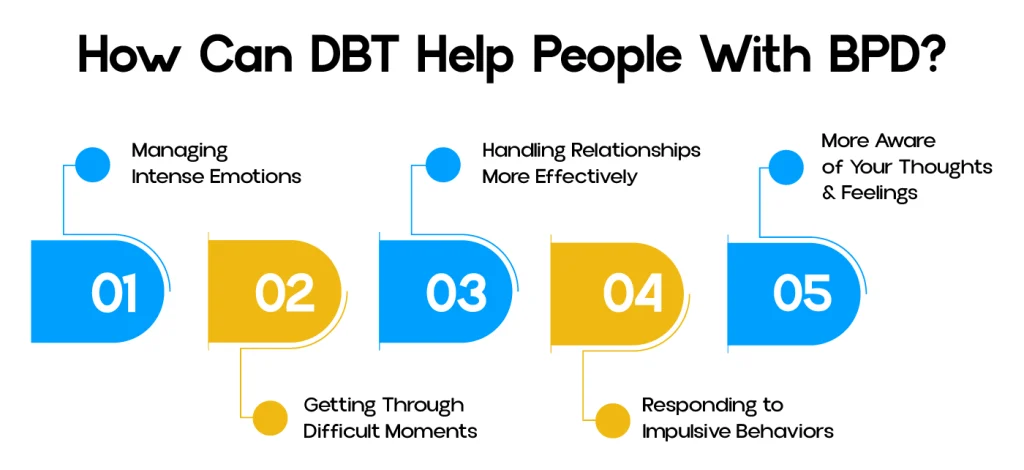
BPD can affect how you experience emotions, respond to stressful situations, and interact with other people. DBT focuses on helping you understand these patterns and develop healthier ways to respond.
The goal isn’t to stop difficult emotions. Instead, DBT helps you learn what to do when those emotions become intense.
Managing Intense Emotions
Emotions can feel overwhelming when you have BPD. You may go from feeling calm to extremely angry, hurt, or upset in a short period of time.
DBT helps you recognize these emotional changes and understand what triggers them. With practice, you can learn to pause and choose how you want to respond instead of reacting immediately.
Learning to recognize your triggers can be an important part of this process. Understanding what happens before an emotional reaction may make it easier to identify patterns and practice a different response. You can also learn more about managing these reactions in our guide to handling trigger responses.
Getting Through Difficult Moments
Some situations can create a strong urge to act impulsively. You may want to escape the situation, lash out, or turn to behaviors that make things worse.
Distress tolerance skills can help you get through these moments without making things worse. They give you practical ways to cope until the intensity of the emotion begins to settle.
For example, imagine that you send someone a text message and they don’t respond for several hours. You might immediately think that they’re angry with you or don’t want to talk to you anymore. That thought could lead to anxiety, anger, or an urge to send several more messages.
Instead of immediately acting on that reaction, DBT skills can help you pause, notice what you’re feeling, and consider other possible explanations. You can then choose a response based on the situation rather than the intensity of the emotion.
Handling Relationships More Effectively
Relationships can be complicated when emotions are intense. Fear of rejection or abandonment can sometimes affect how you communicate or respond to others.
DBT teaches interpersonal skills that can help you express your needs, set boundaries, handle conflict, and communicate more clearly.
These skills can be particularly useful when a difficult conversation or disagreement triggers a strong emotional response. Rather than avoiding the conversation or reacting impulsively, you can practice communicating your needs while also considering the other person’s perspective.
Responding to Impulsive Behaviors
Strong emotions can sometimes lead to impulsive decisions. DBT helps you identify the thoughts, feelings, and situations that often come before these behaviors.
Once you understand these patterns, you can start practicing safer, more helpful ways to respond.
This process takes practice. The goal isn’t to expect yourself to respond perfectly every time, but to gradually build skills that make healthier responses easier to access when emotions become intense.
Becoming More Aware of Your Thoughts and Feelings
Mindfulness helps you pay attention to what is happening in the present moment. Instead of immediately acting on a thought or emotion, you learn to notice it first.
That small pause can give you more control over what you do next. With regular practice, mindfulness can also help you become more aware of emotional patterns, physical sensations, and thoughts that may influence your behavior.
If you’re interested in exploring mindfulness-based approaches further, read our guide that provides information about mindfulness-based cognitive therapy.
What Does DBT Treatment for BPD Look Like?
DBT is a structured form of therapy that goes beyond talking about difficult experiences. You learn specific skills and practice using them in situations that come up in everyday life.
A comprehensive DBT program typically includes several parts and often lasts around 6 to 12 months, although the length of treatment can vary depending on a person’s needs and the treatment program.
Individual Therapy
Individual sessions give you time to work one-on-one with a DBT therapist. You can discuss difficult situations, identify patterns in your thoughts and behaviors, and work toward specific treatment goals.
For example, you might talk about an argument with someone close to you. Your therapist can help you look at what happened, what emotions came up, and how you responded. Together, you can explore how DBT skills could help you handle a similar situation differently next time.
DBT Skills Training
Skills training focuses on four core areas as we discussed above: mindfulness, distress tolerance, emotion regulation, and interpersonal effectiveness.
In comprehensive DBT, skills are commonly taught in a weekly group setting, where you learn these skills step by step and practice applying them to everyday situations. Skills groups may last around 2 to 2.5 hours, depending on the program.
Practicing Skills Between Sessions
DBT doesn’t stop when the therapy session ends. Practicing skills between sessions is an important part of the process.
You might use a mindfulness skill when you notice yourself becoming overwhelmed. Or you may use a distress-tolerance skill when you feel a strong urge to react impulsively. With regular practice, these skills can become easier to use when difficult situations arise.
Tracking your thoughts, emotions, triggers, and responses can also help you recognize patterns over time. Journaling can be one way to support this type of self-reflection.
What Does Research Say About DBT for BPD
Research suggests that DBT can help people with borderline personality disorder, particularly with some of the difficulties that can accompany BPD, such as self-harm, emotional dysregulation, and problems with day-to-day functioning.
One of the earliest randomized clinical trials of DBT, conducted by Marsha Linehan and colleagues, found that DBT was associated with reductions in self-harm and fewer days of psychiatric hospitalization compared with treatment as usual. Later studies have continued to examine how DBT compares with other forms of treatment and usual care.
A 2020 Cochrane review examined 75 randomized controlled trials involving more than 4,500 participants with BPD. DBT was one of the most frequently studied therapies in the review. Compared with usual treatment, DBT showed benefits for BPD symptom severity, self-harm, and psychosocial functioning.
Can DBT Help Borderline Personality Disorder (BPD)
DBT is a good choice for borderline personality disorder if the goal of treatment is to help people manage their symptoms and develop healthier ways of responding to difficult emotions and situations.
With DBT, a person may learn to regulate intense emotions, cope with distress, reduce harmful or impulsive behaviors, and build healthier relationships. Over time, these skills can also support better day-to-day functioning and quality of life.
Improvement can take time, and everyone’s experience with BPD is different. Some people may see significant changes with treatment, while others may need different approaches or additional support.
Remember: the right treatment plan depends on a person’s symptoms, needs, goals, and circumstances. A qualified mental health professional can help determine whether DBT is an appropriate option and what type of treatment may be most helpful.
Final Thoughts
Living with BPD can be challenging, but support and treatment can make these challenges easier to manage. DBT provides practical skills for regulating emotions, coping with distress, managing impulsive reactions, and navigating relationships.
DBT isn’t a guaranteed fix, and treatment needs can vary from person to person. If you’re considering DBT for BPD, a qualified mental health provider like Austin DBT Associates can help you understand whether this approach fits your needs and goals.